Taxes & Inflation
Planning That Shows What You Actually Keep in Retirement
Planaberry takes taxes and inflation into account and shows how much income may actually remain after deductions and loss of purchasing power.
Sign up for free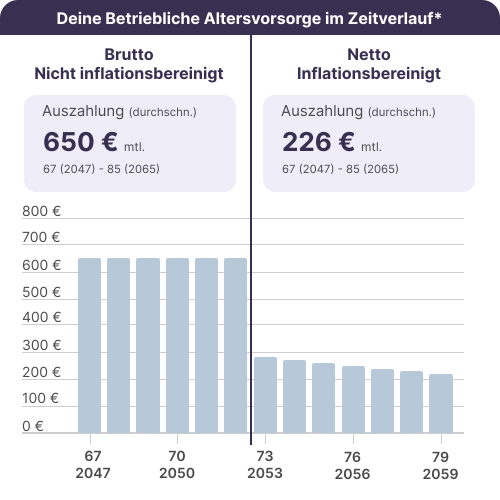
How Inflation Affects Your Plan
The impact of inflation on retirement planning is often underestimated.
In Planaberry, you can view your plan both inflation-adjusted (real, in today's purchasing power) and non-adjusted (nominal, actual amounts).
The inflation-adjusted view makes the effect of inflation easier to understand and shows what your future income and withdrawals may represent in today's purchasing power. This allows you to compare them directly with your current lifestyle.

What you actually keep from your savings
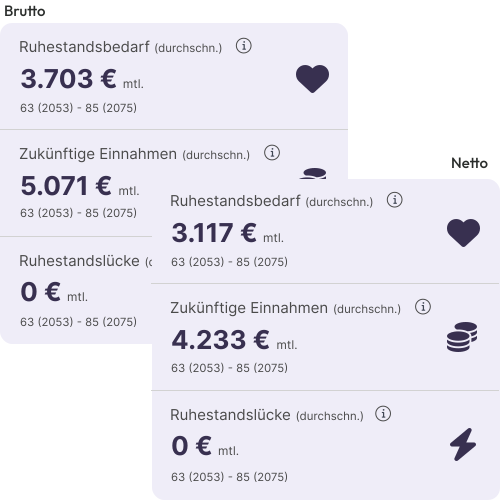
Taxes and contributions can significantly affect how much of your assets will actually be available in retirement.
Planaberry therefore shows both gross and net amounts, helping you understand what income you may realistically expect to have available.
Why This Matters
Because Numbers Often Promise More Than They Deliver
A realistic retirement plan needs to consider factors that directly affect your future income.
Accounting for taxes and inflation helps you understand:
- what income may actually remain available in the future
- how much purchasing power your money may really provide
* Charts are for illustration purposes and may not exactly match how they appear within Planaberry.
Frequently Asked
Questions
-
Many types of income remain taxable during retirement. Depending on the income source, different tax rules and contributions apply.
In practice, the final tax burden is usually determined through the annual tax return. This can lead to additional payments or refunds because the actual tax liability depends on many individual factors, such as other income or deductible expenses.
Since these individual effects cannot be reliably calculated in advance, Planaberry does not model the tax return itself.
Instead, Planaberry applies the currently applicable tax rules and contributions to each income source and estimates the resulting net payments in retirement.
Because potential tax refunds from future tax returns cannot be included, the displayed tax burden is generally modeled conservatively rather than optimistically.
-
Your retirement needs themselves are not taxed. Taxes only apply to the income used to cover those needs, for example income from the statutory pension or from investments.
In the net view, Planaberry shows your retirement needs based on your last net income.
The gross retirement need results from your net need plus the taxes and contributions that apply to your income in each year.
In the inflation-adjusted view, your retirement need typically remains constant.
If you use the non-adjusted (nominal) view, your retirement need increases each year according to the assumed inflation rate.
Housing costs or remaining mortgage payments can optionally be included.